What Is Topical Mapping? A Simple Guide for Beginners

What Is Topical Mapping? A Simple Guide for Beginners
In the digital age, content writing alone is not sufficient. Topical mapping is one of the strongest strategies employed by SEO experts.To get your site or blog ranking on Google you need a solid content strategy.
If you’re a student, blogger, digital marketer, or business owner, having a grasp on topical mapping will transform the way your content performs on the web. In this blog, IICE Computer Education Shimla explains topical mapping in very simple words so that anyone can understand and apply it.
What Is Topical Mapping?
Topical mapping is the planning and organizing of content around a main topic, and supporting related subtopics in a hierarchical manner.
Rather than producing scattered content, topical mappings will allow you to develop authoritative content on a subject from beginner through to expert level.This shows Google that your website is an authority on that subject.
In simple words, topical mapping means:
A connected structure that encompasses everything users want to know about a topic, step by step.
Why Should You Care about Topical Mapping in SEO?
Google are trying to provide users with the best, most helpful content. When you go deep on a topic on your website, Google trusts your site more.
Topical mapping helps in:
- Better Google rankings
- More organic traffic
- Strong website authority
- Lower bounce rate
- Clear content structure
Websites that use topical mapping often rank faster and stay on Google for a long time.
How Topical Mapping Works
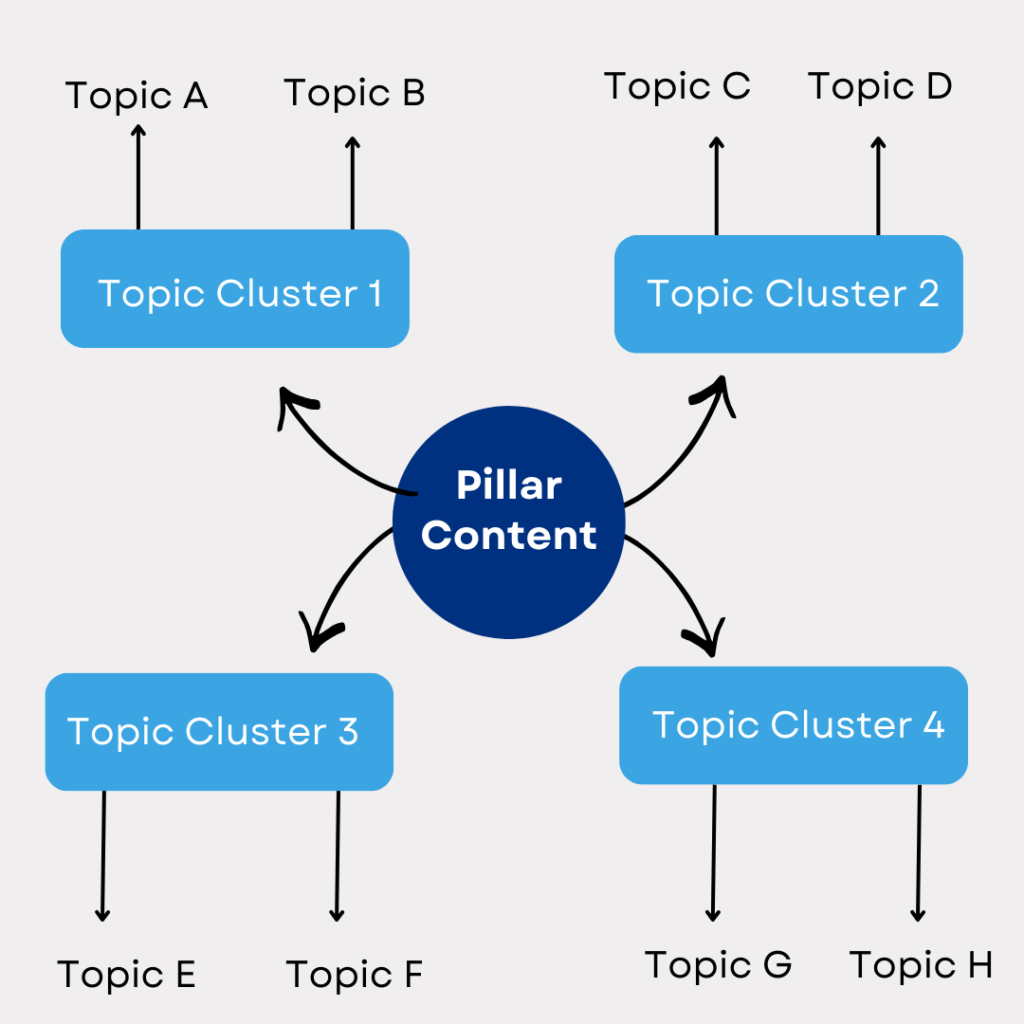
Topical mapping works by dividing content into three main levels:
1. Main Topic (Pillar Content)
This is the core topic of your website or blog.
Example:
Digital Marketing
2. Subtopics (Cluster Content)
These are related topics that explain different parts of the main topic.
Example:
- SEO
- Social Media Marketing
- Google Ads
- Email Marketing
3. Supporting Topics (Detailed Content)
These explain subtopics in detail.
Example under SEO:
- On-page SEO
- Off-page SEO
- Technical SEO
- Keyword research
All these pages are internally linked, creating a strong content network.
Example of Topical Mapping
Let’s understand with a simple example:
Main Topic: Web Designing
Subtopics:
- What is web designing
- HTML basics
- CSS basics
- Responsive design
- Web designing tools
Supporting Content:
- HTML tags explained
- CSS properties
- Mobile-friendly website design
- Best tools for web designers
This structure helps Google understand your website clearly.
Benefits of Topical Mapping
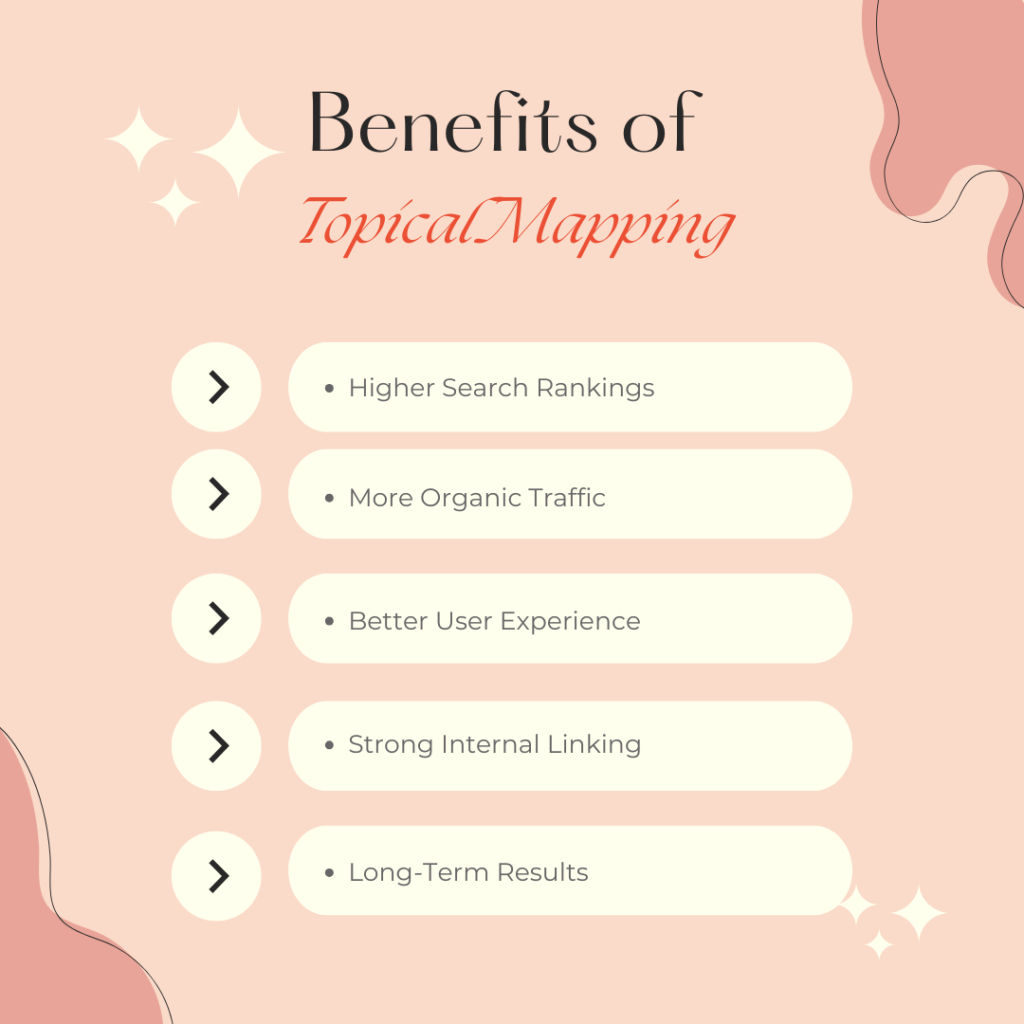
Topical mapping offers many long-term benefits:
1. Higher Search Rankings
Google prefers websites that fully cover a topic.
2. More Organic Traffic
You rank for multiple keywords automatically.
3. Better User Experience
Users find everything in one place.
4. Strong Internal Linking
Pages support each other and improve SEO strength.
5. Long-Term Results
Unlike short tricks, topical mapping gives stable rankings.
Who Should Use Topical Mapping?
Topical mapping is useful for:
- Bloggers
- Digital marketers
- Coaching institutes
- Educational websites
- Business owners
- E-commerce websites
At IICE Computer Education Shimla, topical mapping is taught as part of Digital Marketing and SEO courses to help students build professional-level websites.
How to Create a Topical Map Step by Step
So here is a very simple process anyone can do:
Step 1: Choose Your Primary Topic
Select a subject in your area of business or interest.
Step 2: Research Subtopics
Use Google search, “People Also Ask”, and keyword tools.
Step 3: Create Content Clusters
Plan articles for each subtopic.
Step 4: Link Content Properly
Connect related pages using internal links.
Step 5: Keep the Content Fresh and Up to Date
Keep content fresh and updated.
Common Mistakes to Avoid in Topical Mapping
Many people make these mistakes:
- Writing content without planning
- Ignoring internal linking
- Covering topics partially
- Keyword loading
- Release substandard articles
Topical mapping is about quality, not quantity.”
Why Learn Topical Mapping at IICE Computer Education Shimla?
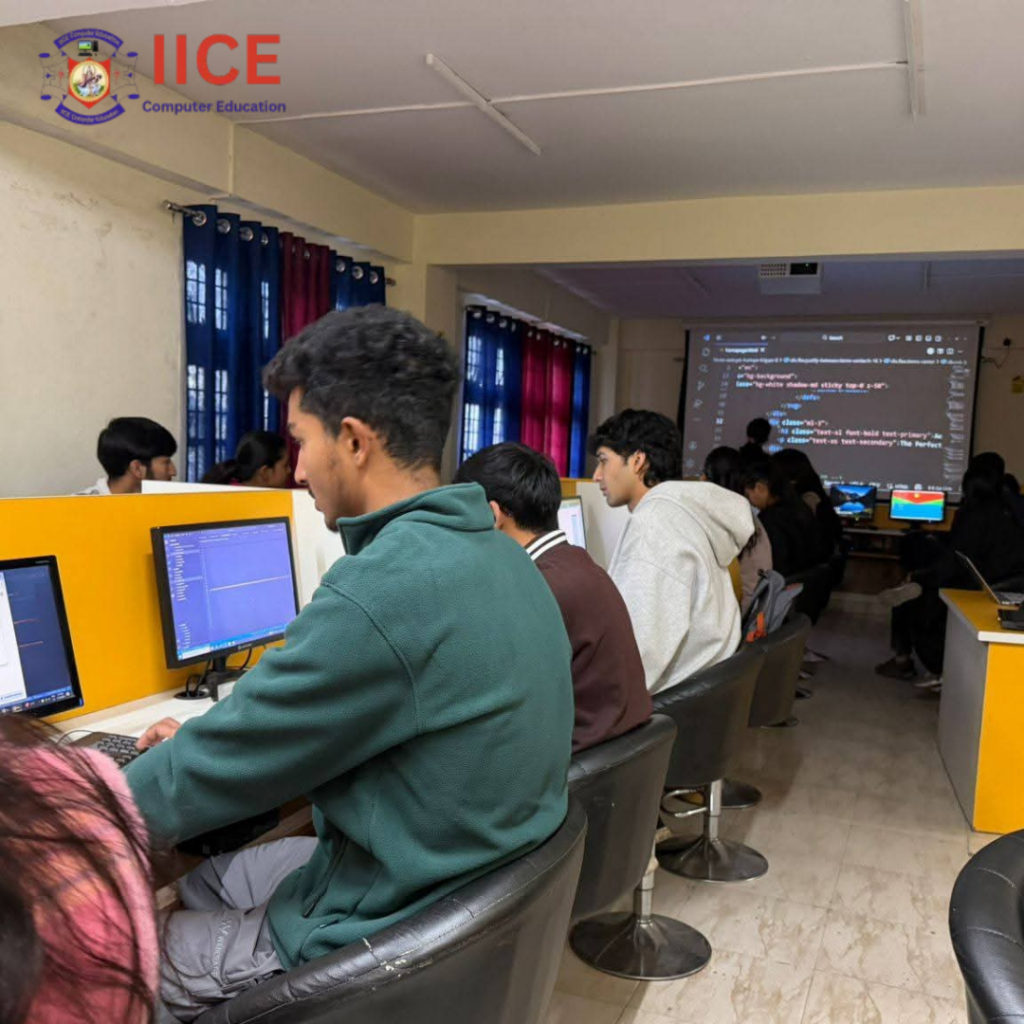
IICE Computer Education Shimla provides practical training in:
- SEO fundamentals
- Keyword research
- Topical mapping strategy
- Content planning
- Real project work
Students learn how to produce content that ranks on Google and establishes long term careers in online marketing.
Conclusion
Topical mapping is more than an SEO strategy; it’s a novel method of content planning and organization. It contributes to websites ranking higher in Google, as well as gaining trust and authority.
If you are interested in doing blogging, SEO, or digital marketing, you have to learn topical mapping. It’s a skill anyone, with the right guidance and practice, can acquire.
FAQs on Topical Mapping
1. What is topical mapping in SEO?
Topical mapping is a content strategy where related topics are planned and linked to cover a subject completely.
2. Is topical mapping good for Google ranking?
Yes, it does help Google more understand your site and improve rankings.
3. Is topical mapping only for blogs?
No, it works for business websites, e-commerce sites, and educational portals as well.
4. Do beginners need topical mapping?
Yes, beginners benefit the most because it gives clear direction.
5. How many articles do you need for mapping topical coverage?
There isn’t a solid number. It’s based on depth of subject.
6. Is topical mapping better than keyword stuffing?
Yes, topical mapping focuses on helpful content, not keyword overuse.
7. Does topical mapping reduce bounce rate?
Yes, well-organized content means that users are staying longer.
8. Is topical mapping effective for local SEO?
Yes, it does work great for local business, and for organizations.
9. How long does topical mapping take to show results?
Typically 2–4 months, depending on the quality of competition and content.
10. Where can I learn topical mapping professionally?
You can learn it at IICE Computer Education Shimla through their Digital Marketing and SEO courses.