Python Programming with AI: The Future Skill Every Student Should Learn in 2026
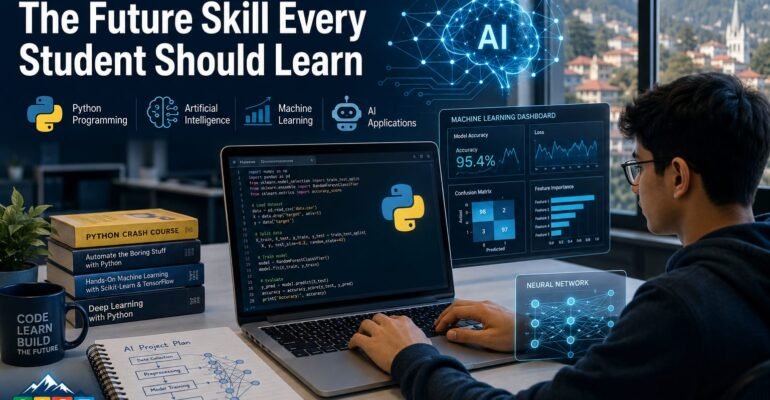

Python Programming with AI: The Future Skill Every Student Should Learn in 2026
Python Programming with AI
Technology is evolving at an increasingly rapid pace. The way we live and work is being revolutionised by Artificial Intelligence (AI), from voice assistants and chatbots to driverless cars and smart recommendation systems. There’s one powerful programming language behind many of these intelligent systems: Python.
Now, when it comes to developing software for Artificial Intelligence, Machine Learning, Data Science, Automation, etc., Python is the most sought after programming language. Regardless of your background as a student, graduate, working professional or entrepreneur, learning Python with AI can usher in new career possibilities.
In this blog you will get to know Python Programing with AI and its advantages in Career Opportunities and Learning PathWay and also why students and learners are tending towards Professional Training Programs To Learn these Future Reskilling.
What is Python Programming?
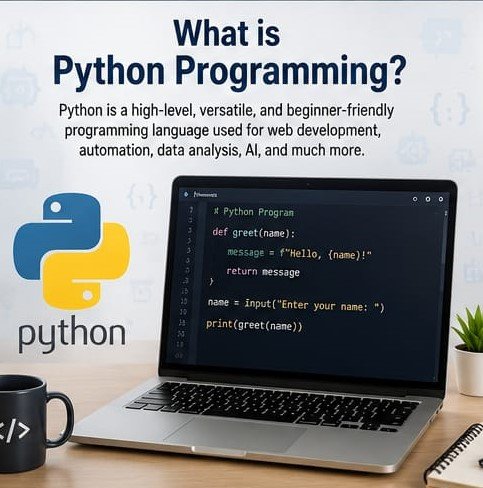
Python is a high-level, general purpose programming language which is widely employable and can be used for a number of programming tasks with its simple english syntax. It was developed by Guido van Rossum, and was first released in 1991. And, python has grown steadily as one of the most popular programming languages in the world.
Many other programming languages are much more difficult to read and write, but Python was developed with readability in mind. Therefore, if you are a beginner who wants to learn programming, this is the best language to start with.
Python is utilized in:
• Web Development
• Artificial Intelligence
• Machine Learning
• Data Science
• Automation
• Cyber Security
• Software Development
• Cloud Computing
• Internet of Things (IoT)
Due to its versatility and strong libraries, Python has established itself as the go-to language for AI development.
Understanding Artificial Intelligence
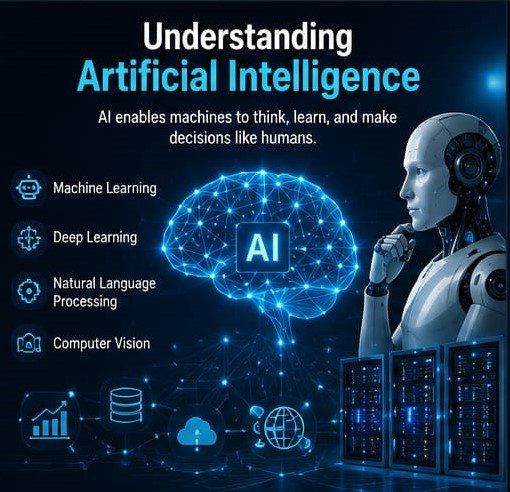
Artificial Intelligence is the science and engineering of making intelligent machines, especially intelligent computer programs. These tasks include learning, reasoning, problem solving, making decisions, recognizing speech, and understanding language.
Here are a few examples, bots and AI in daily life:
• ChatGPT et assistants IA
• Recommandations Netflix, YouTube
• Google Search
• Assistants vocaux tels que Siri et Alexa
• Self-driving vehicles
• Face recognition systems
• Support client propulsé par l’IA
The Authoritative Artificial Intelligence is nothing more than a pipedream. It’s part of our everyday lives already, and companies in every industry are pouring money into AI technologies.
Why Python is the Best Language for AI
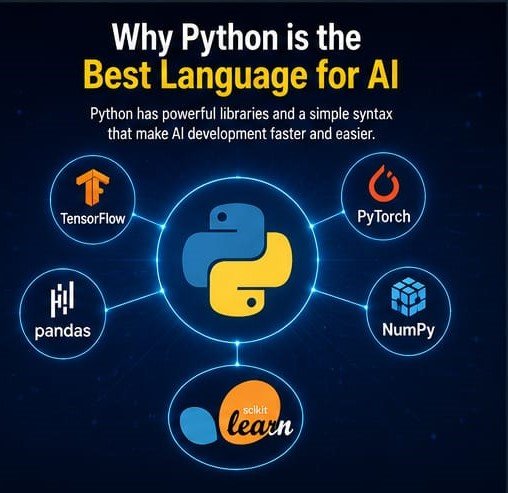
Python has become the most popular language for AI due to being the easiest to learn, the most flexible, and having the most broad ecosystem of libraries.
Here are some of the reasons why the Python language is the dominant language in the AI community:
Easy to Learn
Python has an easy to read and use syntax. Novices can concentrate on learning concepts instead of being intimidated by complex code.
Large Collection of Libraries
Python provides powerful libraries such as:
• NumPy
• Pandas
• Matplotlib
• TensorFlow
• Keras
• PyToch
• Scikit-learn
These libraries save time when developing code and also facilitate the implementation of AI.
Strong Community Support
With millions of developers globally, Python is full of projects, tutorials, forums, and open-source tools.
Cross-Platform Compatibility
Python programs can be developed and run on Linux, Windows and Mac OS X.
High Industry Demand
AI companies, startups, tech giants most use Python as the dominant language.
How Python and AI Work Together
The algorithms of the Artificial Intelligence systems have to be able to process large amounts of data, to find patterns in these data, and to make predictions.
Python has the necessary ingredients to make these smart systems.
For example:
• Data is extracted and cleaned in Python.
• Python libraries are used to train machine learning models.
• Applications are deployed with Python frameworks.
• Result visualization and analysis via Python tools.
This all-inclusive environment makes Python the best options as a language for AI development.”
Skills You Learn in a Python with AI Course
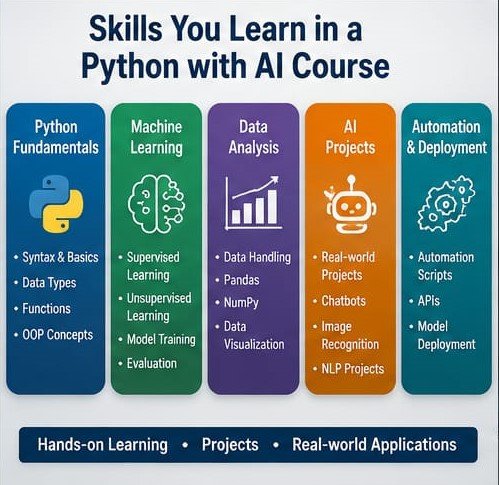
A course in Python with AI is usually inclusive of the following topics.
Python Basics
Students will be able to:
• Variables
• Data Types
• Operators
• Loops
• Functions
• File Handling
• Exception Handling
• OOP (Object-Oriented Programming)
Data Analysis
Students work with datasets using tools such as:
• Pandas
• NumPy
• Matplotlib
Learning Machine
Important ideas include:
• Supervised Learning
• Unsupervised Learning
• Classification
• Regression
• Clustering
Applications of artificial intelligence
Candidates make projects on topics like:
• chatbots
• recommendation systems
• image recognition
• sentiment analysis
• predictive modelling
Real-World Projects
Students build projects and practical projects help students gain hands-on experience and a strong portfolio.
Career Opportunities After Learning Python with AI
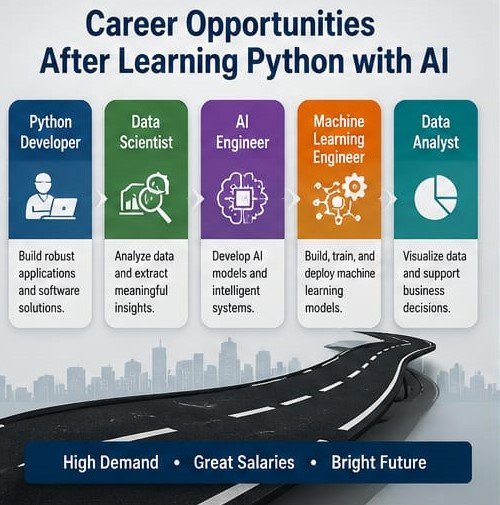
Ai specialists are in high demand globally.
Some of the most common career paths are:
Python Developer
Write software applications, automation scripts, and backend systems in Python.
Data Analyst
Process data to extract meaningful insights for the organizations to think better.
Data Scientist
Apply predictive analytics and machine learning to address business challenges.
Machine Learning Engineer
Build machine learning models and deploy models to production.
AI Engineer
Create intelligent systems that can learn and decide.
Business Intelligence Analyst
Turn data into actionable business decisions.
Automation Engineer
Create automated solutions for increasing efficacy and productivity.
Research Scientist
Work with cutting-edge AI technology and sophisticated machine learning algorithms.
Industries Hiring Python and AI Professionals
Since python and AI experts are in high demand in various industries.
These include:
• Information Technology
• Healthcare
• Banking and Finance
• Education
• E-commerce
• Manufacturing
• Digital Marketing
• Telecom
• Government Organizations
• Research Institutions
As AI usage gets more widespread, the need for trained professionals will grow exponentially over the next 2-5 years.
Benefits of Learning Python with AI
Future-Proof Career
AI is among the fastest growing technologies worldwide.
High Salary Potential
People with Python and AI experience also tend to make good money.
Global Opportunities
Skilled Python / AI related profiles are in demand across geographies.
Freelancing Opportunities
A lot of organizations also bring on board freelance Python and AI professionals for work on specific projects.
Entrepreneurial Advantage
Knowledge of AI gives entrepreneurs the ability to build new products and services.
Continuous Learning
AI is always evolving, so there is always an opportunity to do something new and exciting.
The Importance of Practical Training
Learning about theories is not enough by itself.
Students should concentrate on:
• Hands-on coding
• Real-world projects
• Industry case studies
• Portfolio development
• Problem-solving exercises
Practical experience allows students to gain confidence and they become employable.
ISO Certified Training Matters
While choosing a training institute, students must look for the quality standards and credibility.
An ISO certified institute adheres to defined quality management system that aims to enhance the quality of training and satisfaction of students. ISO certification reflects the dedication toward achieving and sustaining consistent educational quality, professional standards and ongoing enhancement.
The benefit of enrolling to an institute which takes pride in adhering to quality standards at which are recognized is that students will be provided with structured training, up to date curriculum and established professional support for learning.
Registered by the Central Government of India
Students usually search for the institutions which has proper registration and compliance.
The training providers registered under relevant regulations of Central Government of India has a recgonized commitment to working within legal and administrative regulations. These kind of registrations generates transparency, credibility and trust for students as well as employers.
Students should always check the credentials of the institute, the registrations, certifications, and quality of training before applying for any professional course.
About IICE Computer Education Shimla
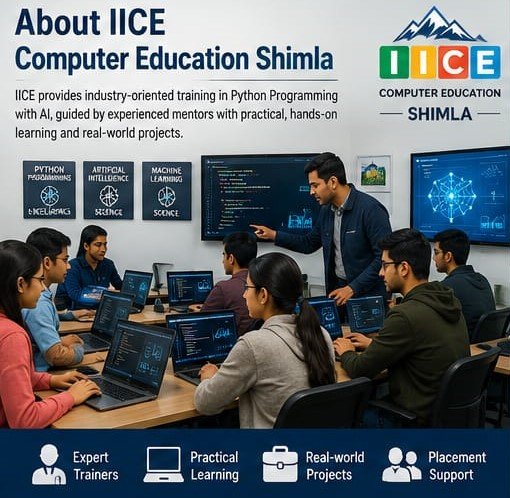
IICE Computer Education Shimla has become a leading name in the field of computer and technology training. The institute offers career-oriented courses that enable students to acquire pragmatic and industry focused skills.
The courses are intended for students, job seekers, entrepreneurs and professionals who are keen to up-skill and advance their career.
Areas of interest cover:
• Python Programming
• Artificial Intelligence
• Machine Learning
• Data Analytics
• Digital Marketing
• Web Development
• Graphic Designing
• Tally with GST
• Full Stack Development
The institute has a good exposure practical learning and project based training which makes students to confident enough in real environments.
Students now have the assistance of expert trainers, cohesive learning paths, hands-on projects, and pretzel guidance.
For those training to carve out a career in the tech world, Python Programming with AI is one of the best skills you can learn and professional training can really help you fast track that learning.
Conclusion
The future belongs to those who are literate in technology and can wield it with the power of their intelligence. Programming with Python and AI isn’t just a technical ability, it’s an enabler for building innovation and creativity – and opening doors in your career.
Whatever your ambition — to become a Python developer, AI engineer, data scientist, or entrepreneur — mastering Python with AI will ensure you have the edge in an increasingly digital world.
As companies start to use Artificial Intelligence, the demand for professionals with good python programming skills will not die down. Spending time to learn these technologies today can lead to opportunities that define a prosperous tomorrow.
For hands-on experience, real applications, and future-ready technology careers, you just can’t go wrong with Python Programming with AI in 2026 – one of the best choices you can make in education!
FAQs (Python Programming with AI)
Can AI do Python programming?
Yes—AI can write, debug, and optimize Python code, enabling developers to craft applications more quickly. But real-world expertise is still necessary to solve problems, be creative, and make sure the code actually does what the people want.
Is Python or C++ better for AI?
Python is better for AI in general as it is easy to learn and understand and has great AI and machine learning libraries such as TensorFlow, PyTorch etc. C++ is executed faster, but Python is still the preferred language for most AI projects and beginners.
Will AI replace Python coding?
No, AI won’t entirely replace the need to know Python. Instead, AI is assisting developers writing code to do so faster and more efficiently. There are still plenty of opportunities for Python programmers to design systems and solve complex problems, customize AI solutions, and ensure software works. In the future, AI development and Python development will be complementary rather than mutually exclusive.
Is ChatGPT good for Python?
Yes, ChatGPT is excellent for learning and using Python because it can help you understand coding concepts, write scripts, debug errors, generate code examples, and improve your programming skills faster.
Is AI writing 90% of code?
Not yet. Although AI tools can create and help with a significant amount of code, human developers are still needed to plan, review, test, debug, and make important decisions. AI should be thought of as an extremely helpful coding assistant, not a substitute for programmers.
Is 2 hours a day enough to learn Python?
Yes, for most beginners 2 hours per day is enough to study Python. If you practice every day, you can probably learn the basics of Python in 1-2 months and start making real-world projects, automation scripts, and AI applications within a few months. The key is to avoid long infrequent sessions, and code often.
Is 30 too old to learn Python?
Absolutely not. Age is never a barrier for learning Python. Several successful developers, data analysts and AI professionals begin their journey of learning Python in their 30s or even beyond. Your age is no barrier to learning how to code, and with a bit of luck, some perseverance and the right guidance, you can develop some useful programming skills and open up new career opportunities at any stage of life.
What kind of jobs use Python?
Python is sought after in jobs like Python Developer, Data Scientist, AI Engineer, Machine Learning Engineer, Data Analyst, Software Developer, Automation Engineer, Cybersecurity Specialist Web Developer, and many more which makes it one of the most popular programming languages to learn for building a career.
Is 27 too late to start coding?
No, you are never too old to start coding but 27 is definitely not late to start coding. A lot of great developers started learning to code in their late 20s, 30s, and even later. With regular practice and proper guidance, you can learn coding, make projects and have a successful career in technology irrespective of your age.
Was Elon Musk a coder?
Yes, Elon Musk was a self-taught programmer who started coding at a young age and even created and sold his first video game, Blastar, at just 12 years old.