
Keyword Density vs Keyword Difficulty: What Actually Matters for SEO?


If you are new to SEO or are trying to rank your site on Google, you probably have heard two common terms over and over again: keyword density and keyword difficulty. Most novices are confused about the two and concentrate on the wrong thing.
Some people think that repeating keywords a lot times will help ranks.Others think only choosing low-difficulty keywords is enough. But in reality, SEO is not that simple. In this blog post, we will explain clearly what keyword density vs keyword difficulty, how much are they different from each other, and which is more important to rank on the Google search engine.
What does keyword density mean?
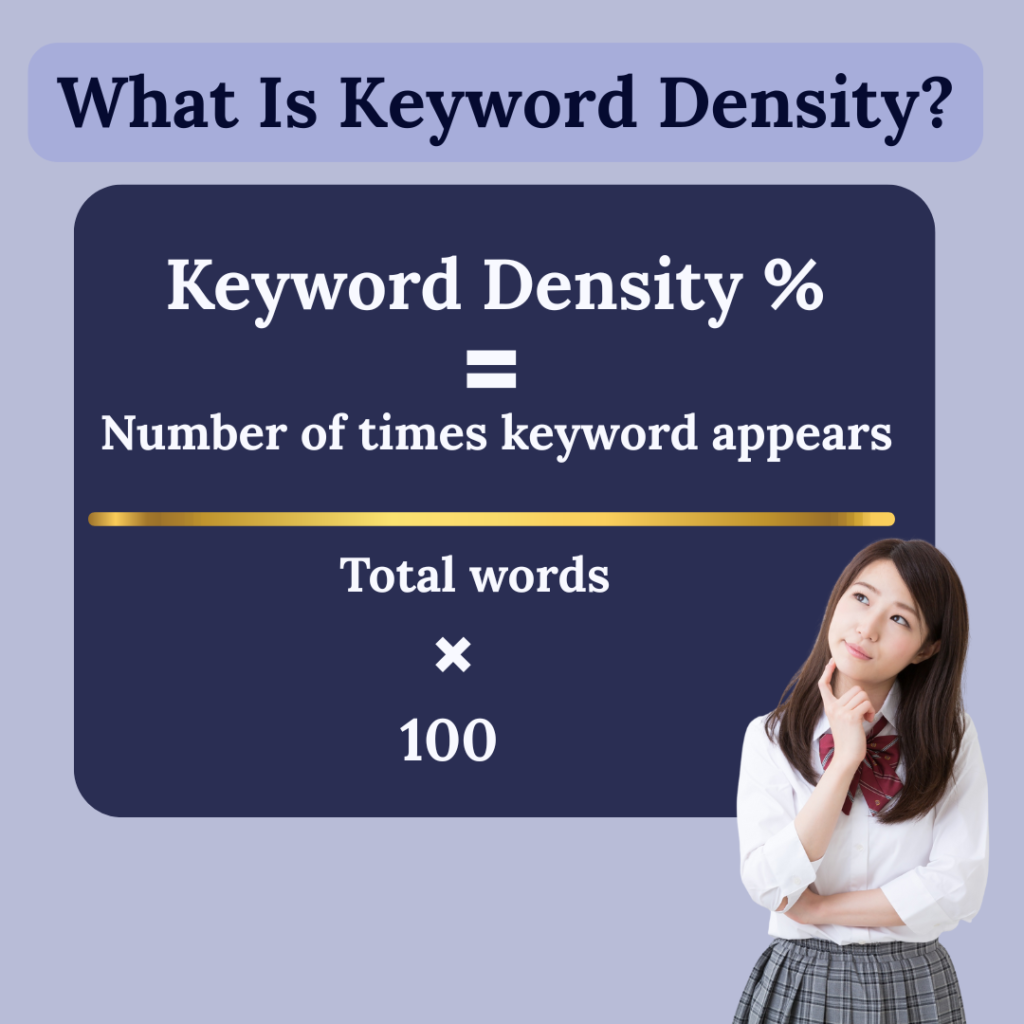
Keyword density informs how often a keyword is mentioned in your contents in relation to the number of words.
Simple example:
If you have a 1,000 words article and your keyword is present 10 times, you have a keyword density of 1%.
Formula:
Keyword Density = (Number of times keyword appears ÷ Total words) × 100
In the past, SEO was simply a matter of keyword density. People used to spam the same keywords over and over again to rank quickly.
Is keyword density important today?
- Yes, but up to a point.
- Too less → It looks like spam and might get penalized
The normal range for the keyword density is 0.5% to 1.5%.
What Does Keyword Difficulty Mean?
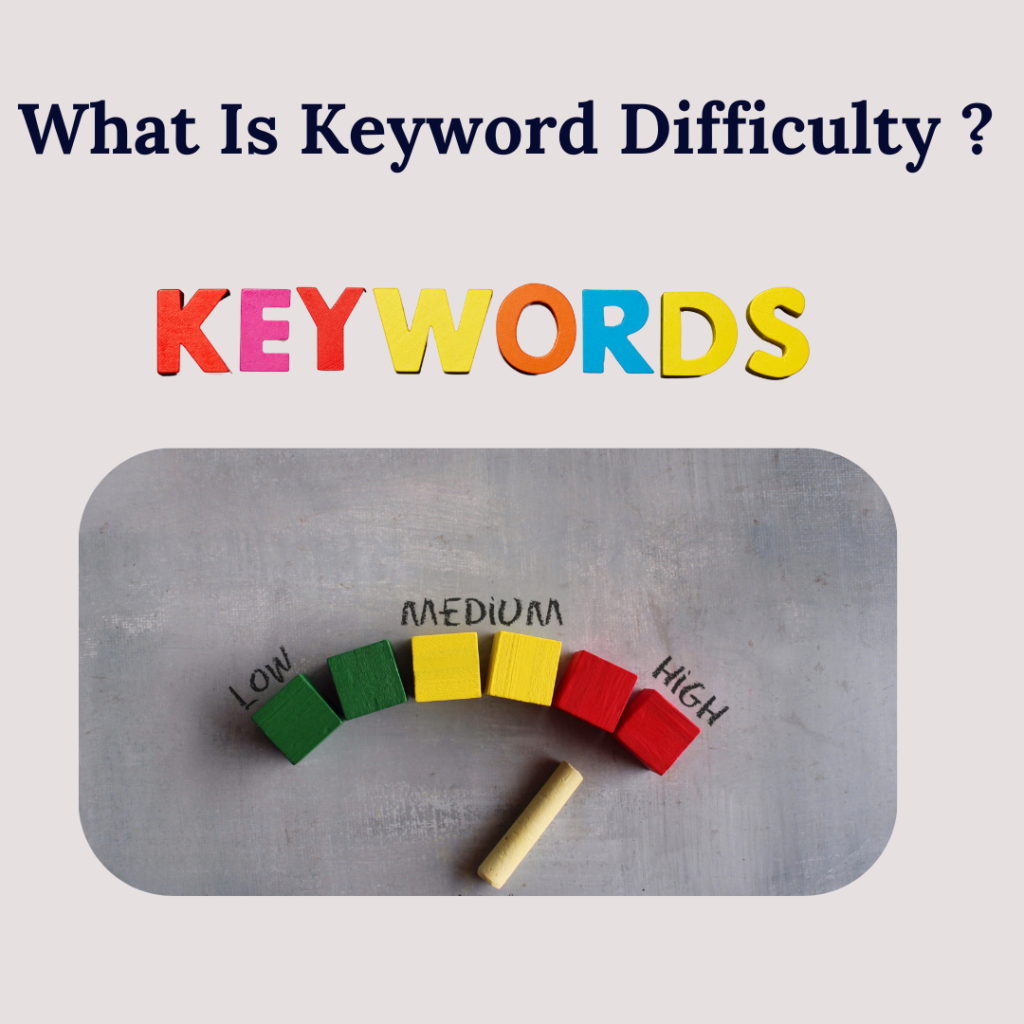
Keyword difficulty indicates the difficulty of ranking for a keyword on Google.
It is based on:
- Competition
- Authority of websites ranking already
- Quality of content
- Backlinks
- Search intent
SEMrush, Ubersuggest, and Ahrefs are SEO tools that provide keyword difficulty in a numerical (0-100) format.
Simple understanding:
- 0–20 → Easy (best for beginners)
- 21–40 → Medium
- 41–60 → Hard
- 61+ → Very competitive
If you choose a keyword that’s very competitive it’s hard to rank, especially with a new site.
Keyword Density vs Keyword Difficulty (Key Difference)
| Point | Keyword Density | Keyword Difficulty |
| Meaning | How often keyword is used | How hard it is to rank |
| Control | Fully in your hands | Depends on competition |
| Role | Content optimization | Keyword selection |
| Risk | Keyword stuffing penalty | Wasting effort |
| Importance | Secondary | Primary |
Keyword difficulty matters before writing,
Keyword density matters while writing.
Which Is More Important for Ranking?
If we talk honestly, keyword difficulty is more important than keyword density.
Why?
Because:
- You can control density anytime
- You cannot easily beat high-authority websites
- Choosing the wrong keyword wastes months of effort
A low-difficulty keyword with natural keyword usage has higher chances of ranking than a high-difficulty keyword with perfect density.
Google’s Focus Has Changed
- User intent
- Content quality
- Topic relevance
- Natural language
- Helpful content
Google does not count keywords manually. It has knowledge of context, synonyms and related words.
That’s why:
- Over-optimizing keywords doesn’t work
- Writing naturally works best
The Correct Way to Use Keywords in 2024
Rather than focusing solely on density:
- Use the main keyword naturally
- Add related keywords
- Use synonyms
- Write for humans, not bots
Best places to add keywords:
- Title
- URL
- Headings (H1, H2)
- First 100 words
- Meta description
- Image alt text
Usual SEO errors to avoid
- Keyword stuffing
- Ignoring keyword difficulty
- Writing only for SEO
- Copy-paste content
- Using exact keywords forcefully
These mistakes can kill your ranking chances.
Smart SEO Strategy (Recommended)

- Find low or medium difficulty keywords
- Understand user intent
- Write detailed and helpful content
- Use keywords naturally
- Focus on readability
- Improve internal linking
- Build authority slowly
This approach pays off over time.
Conclusion
The debate of keyword density vs keyword difficulty should not confuse you anymore.
- Keyword density helps search engines understand your content
- Keyword difficulty decides whether ranking is possible or not
First choose the right keyword,
Then use it naturally.
That’s how modern SEO works.
FAQs: Keyword Density vs Keyword Difficulty
Q. What should the keyword density be for SEO?
There is no golden rule, but 0.5%-1.5% is usually considered to be a safe range.
Q. Will keyword density be relevant in 2025?
Yes, but only with regard to the relevance, not the game manipulation or the ranking game.
Q. Can high keyword density improve ranking?
No. High density can harm your ranking due to keyword stuffing.
Q. What is a good keyword difficulty for beginners?
Keywords with difficulty under 30 are best for new websites.
Q. Which SEO factor is more important?
Keyword difficulty is more important than keyword density.
Q. Do I need to focus on keyword density to rank?
Yes, Google gets it if you’re content is relevant and useful.
Q. Are SEO tools necessary for keyword difficulty?
They’re helpful, but you can also look through the Google search results yourself.
Q. Is keyword stuffing punishable by Google?
Yes. Keyword stuffing may result in ranking demotions or manual penalties.
Q. Can long-tail keywords reduce difficulty?
Long-tail keywords usually have less competition and higher conversion rates.
Q. What is the best technique for SEO now?
Write human-focused, helpful, and original content with smart keyword selection.
Q. Keyword density vs keyword difficulty example.
If you use the keyword “digital marketing course” 10 times in a 1,000-word article, that is keyword density.
If many strong websites are already ranking for “digital marketing course”, making it hard to rank, that is keyword difficulty.
Q. Keyword density vs keyword difficulty javascript
If you repeat the keyword “JavaScript tutorial” naturally a few times in your article, that is keyword density.
If many high-authority websites already rank for “JavaScript tutorial”, making it hard to appear on page one, that is keyword difficulty.
Q. Is SEO difficulty the same as keyword difficulty?
No. It is not. Keyword difficulty indicates how difficult it would be to rank for that keyword, whereas SEO Difficulty takes into account other overall factors such as website authority, content quality, competitiveness. In short, SEO Difficulty = Keyword Difficulty + some more factors from SEO.